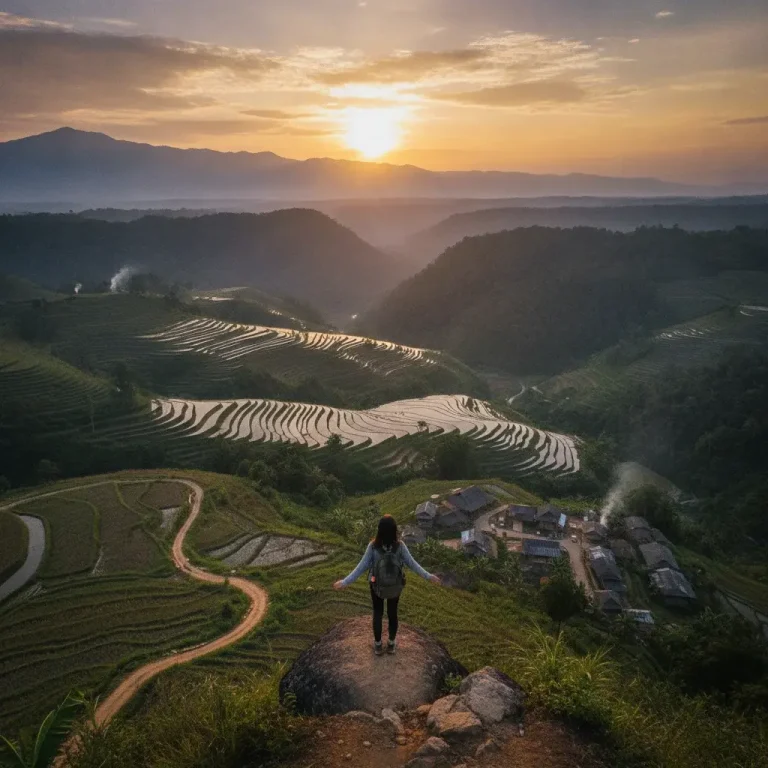
Travel demand across the country has reorganized around landscape access, cultural density, and multi-stop mobility, forming a dominant pattern summarized by USA Travel Trends National Parks Coastal Cities as travelers prioritize geographic scale, environmental immersion, and walkable historic districts over single-destination tourism models. Movement itself functions as the product, not merely the method of reaching attractions.

USA Travel Trends National Parks Coastal Cities
Tourism behavior has shifted toward distributed exploration. Visitors structure trips around corridors rather than endpoints. A single journey now links protected wilderness, mid-sized cultural cities, and coastal environments within one logistical arc. Federal land availability, interstate connectivity, and restored urban waterfronts create a layered system unmatched in spatial variety.
The protected land network managed through the National Park Service anchors this structure by preserving ecological regions large enough to sustain extended visitation without collapsing into spectacle-based tourism. These areas function as environmental infrastructure, not isolated recreational zones.
Urban redevelopment programs simultaneously transformed former industrial shorelines into pedestrian economies, documented in revitalization efforts highlighted by the National Trust for Historic Preservation. The result is a travel model combining conservation geography with adaptive reuse of historic districts.
Mobility Corridors as Primary Destinations
Travelers increasingly select routes recognized for experiential continuity. Highways, rail lines, and scenic byways are evaluated for interpretive value, not just efficiency. The road becomes a sequential observation platform.
The Federal Highway Administration Scenic Byways Program formally identifies routes where transportation design integrates archaeology, ecology, and regional culture. These corridors impose speed moderation, controlled signage, and viewpoint placement to encourage environmental literacy.
Rail alternatives reinforce this pattern. Long-distance journeys such as those operated by Amtrak allow travelers to observe terrain transitions without the cognitive fragmentation caused by air travel. The gradual shift from prairie to mountain or estuary to forest builds spatial awareness absent in point-to-point tourism.
Airports now function primarily as entry nodes into regional circuits rather than final destinations.
National Parks as Structural Anchors of Domestic Exploration
Large protected landscapes supply temporal depth. Visitors remain longer because these environments cannot be consumed quickly. Geological formations, wildlife patterns, and hydrological systems require observation over distance and time.
At Yellowstone National Park, geothermal features demonstrate subsurface volcanic processes that reshape terrain continuously, preventing static interpretation. At Grand Canyon National Park, stratified rock layers reveal nearly two billion years of Earth history, converting visual scenery into chronological narrative.
These locations stabilize tourism flows because they cannot be replicated artificially. Unlike entertainment-based attractions, protected ecosystems derive value from authenticity and scale.
The economics of gateway communities reflect this durability. Towns bordering major parks sustain lodging, guiding, and conservation employment tied directly to environmental stewardship rather than seasonal novelty.
Coastal Cities as Interfaces Between Nature and Density

While wilderness areas provide spatial magnitude, coastal cities offer compression. Historic ports evolved into cultural districts where maritime geography intersects with architecture, cuisine, and migration history.
Cities such as Boston, Charleston, and San Diego reoriented toward waterfront accessibility after decades of industrial decline. Urban shoreline restoration described by the National Oceanic and Atmospheric Administration emphasizes resilience, public access, and habitat recovery.
Travelers move from expansive national parks to tightly scaled historic streets within the same itinerary, experiencing contrast rather than redundancy. Walking replaces driving. Local economies replace federal land systems. The oscillation between these environments sustains engagement across longer trips.
Regional Diversity Within a Single National Framework
The United States contains climatic and geological heterogeneity rarely found within one political boundary. Tourism leverages this diversity through multi-region routing.
Western Terrain Systems
The western states foreground tectonic drama. Mountain ranges, deserts, and volcanic remnants dominate visual identity. Drives across Nevada, Utah, and Arizona reveal active geomorphology shaped by uplift and erosion.
Locations like Zion National Park compress vertical sandstone formations into narrow canyon corridors, producing microclimates and biodiversity gradients measurable within short distances. Further north, Glacier National Park preserves alpine ecosystems shaped by glacial retreat, providing visible evidence of climatic change.
Western travel emphasizes exposure, distance, and low-density settlement patterns.
Central Landscapes
The central states present agricultural continuity and river-based infrastructure. Tourism here integrates cultural geography with environmental observation. The Mississippi River system, analyzed through resources from the U.S. Geological Survey, illustrates watershed dynamics that shaped trade, settlement, and ecological exchange.
Historic towns, grain corridors, and prairie preserves reveal how human land use interacts with continental hydrology.
Eastern Ecological Density
Eastern regions compress biodiversity into accessible ranges. Forest canopies, humid climates, and pre-industrial settlement grids produce layered landscapes where natural and cultural history overlap continuously.
The Great Smoky Mountains National Park demonstrates this convergence through preserved Appalachian ecosystems alongside historic cabins and agricultural clearings. Visitors encounter environmental continuity shaped by centuries of subsistence adaptation.
Tourism Economics Shift Toward Distributed Spending
Traditional tourism concentrated revenue in major metropolitan centers. The emerging pattern distributes expenditure across rural counties, secondary cities, and conservation zones.
According to analysis published by the U.S. Travel Association, domestic travelers increasingly pursue multi-stop journeys that extend economic participation beyond primary hubs. Fuel stations, regional museums, tribal lands, and local farms become integral components of the travel economy.
This distribution reduces dependency on overcrowded destinations while stabilizing smaller communities.
Infrastructure Designed for Experience Rather Than Throughput

Mid-twentieth-century highway construction prioritized speed and defense logistics. Contemporary modifications emphasize interpretive travel. Road redesign incorporates scenic overlooks, reduced lane widths, and contextual signage.
The Blue Ridge Parkway exemplifies this philosophy. It operates as a linear park where commercial development is intentionally excluded from sightlines, preserving visual continuity across hundreds of miles.
Transportation engineering now integrates environmental psychology principles recognizing that slower travel enhances memory formation and site comprehension.
Cultural Heritage Integrated Into Travel Routes
Tourism growth reflects increased engagement with Indigenous history, migration narratives, and preserved trade paths. These dimensions transform scenic travel into cultural analysis.
At Mesa Verde National Park, ancestral Puebloan dwellings remain embedded within cliff faces, demonstrating architectural adaptation to arid environments. Along the Natchez Trace Parkway, travelers follow a corridor used for centuries by Native American traders, settlers, and early postal routes.
Such sites shift interpretation away from spectacle toward continuity of human presence.
Technology Reshaping Trip Design
Digital mapping platforms, satellite imagery, and geospatial datasets allow travelers to construct precise itineraries informed by terrain and seasonal variability.
Publicly accessible data from NASA Earth Observatory provides environmental visualization that informs route selection, wildfire awareness, and climate observation. Travelers now analyze landscapes before entering them, increasing intentionality.
Navigation systems reduce uncertainty while encouraging detours toward lesser-known regions previously excluded from mainstream tourism.
Seasonal Variability Extending Travel Cycles
Seasonality no longer restricts movement. Instead, it creates differentiated travel phases. Snow transforms mountain parks into controlled winter-access zones. Spring runoff amplifies waterfalls and river systems. Autumn foliage drives eastern visitation peaks.
The National Interagency Fire Center provides monitoring tools that influence western travel planning, demonstrating how environmental management and tourism behavior intersect.
Year-round accessibility stabilizes employment patterns in tourism-dependent regions.
Environmental Management Balancing Access and Preservation
Increased visitation pressures ecosystems. Agencies deploy quota systems, shuttle transportation, and restoration programs to mitigate degradation.
Timed-entry models implemented in several parks regulate vehicle density and reduce emissions accumulation. Conservation funding partnerships described by the National Park Foundation support trail reinforcement, wildlife corridor protection, and habitat recovery.
Tourism sustainability now depends on regulatory frameworks that treat visitation as a managed resource rather than unrestricted flow.
Coastal Restoration and Climate Awareness
Coastal tourism increasingly intersects with climate resilience. Sea-level monitoring, wetland restoration, and barrier island preservation influence how visitors experience shore environments.
Research initiatives coordinated through the U.S. Climate Resilience Toolkit inform infrastructure adaptation in vulnerable destinations. Elevated walkways, dune reconstruction, and flood-resistant architecture reshape coastal accessibility.
Travelers encounter active environmental management alongside recreation, reinforcing awareness of long-term ecological change.
The Psychology of Extended Movement
Long-distance travel through varied landscapes produces measurable cognitive recalibration. Continuous exposure to natural patterns reduces attentional fatigue and increases observational acuity.
Studies archived by the National Institutes of Health link nature exposure to improved cognitive restoration, explaining why multi-day scenic travel generates stronger satisfaction metrics than rapid urban tourism cycles.
The journey becomes neurologically distinct from routine mobility.
Independent Travel Logistics Replacing Package Tourism
Self-directed routing replaces pre-structured tour packages. Travelers combine public datasets, reservation systems, and mapping tools to build modular itineraries responsive to weather, interest, and time constraints.
Reservation platforms integrated with federal recreation systems such as Recreation.gov centralize access to campsites, permits, and timed entries, enabling flexible but regulated exploration.
The model emphasizes autonomy supported by digital coordination rather than guided uniformity.
Transportation Evolution and Low-Emission Travel
Electric vehicle adoption is reshaping route infrastructure. Charging networks increasingly appear along scenic corridors, aligning environmental values with mobility.
Deployment data tracked by the U.S. Department of Energy Alternative Fuels Data Center shows expansion of rural charging availability, allowing long-distance travel with reduced carbon intensity.
Sustainable transit aligns with conservation-oriented tourism identities.
Secondary Destinations Rising in Visibility
Overexposure of iconic locations has redirected attention toward equally significant but less publicized landscapes. Travelers seek experiential parity without congestion.
Parks such as North Cascades, Great Basin, and Congaree receive increased attention due to digital discovery and capacity limitations elsewhere. This redistribution protects flagship destinations while diversifying visitor experience.
Tourism diffusion becomes a protective mechanism for heavily visited environments.
Integration of Food Systems Into Travel Geography
Regional agriculture increasingly defines travel routes. Culinary tourism now aligns with environmental context, connecting landscapes to production systems.
Organizations like the American Farmland Trust promote preservation of agricultural zones that simultaneously function as tourism assets. Vineyard trails, coastal fisheries, and desert farming cooperatives integrate consumption with place-based education.
Food becomes geographic evidence rather than mere service provision.
Historical Transportation Routes Reinterpreted
Legacy corridors such as Route 66 have transitioned from commercial highways to interpretive travel experiences. Preservation initiatives cataloged by the National Route 66 Federation maintain motels, signage, and service stations as cultural artifacts.
These routes document the evolution of American mobility itself, allowing travelers to observe how infrastructure shapes national identity.
Media Influence and Visual Culture
Digital photography platforms amplified interest in wide-format landscapes, encouraging travel designed around visual documentation. Scenic overlooks, desert horizons, and coastal cliffs function as compositional environments.
Tourism boards increasingly provide geospatial photography guidance to disperse crowds while maintaining engagement.
The act of recording travel reshapes route planning.
Urban Nodes as Recovery Points Between Natural Regions
Mid-sized cities now function as recalibration spaces between extended rural segments. Museums, walkable districts, and transit-accessible waterfronts provide contrast without overwhelming scale.
Examples include Santa Fe’s integration of art markets with desert geography and Portland’s adjacency to volcanic and coastal systems. These cities maintain identity without dominating itineraries.
Urban engagement becomes episodic rather than central.
Long-Duration Travel Enabled by Remote Work Flexibility
Workplace decentralization allows extended travel durations previously limited to retirement demographics. Individuals combine professional obligations with slow-moving geographic exploration.
Broadband expansion documented by the Federal Communications Commission enables connectivity in regions once excluded from long-term stays, transforming tourism into temporary relocation.
Travel becomes integrated into lifestyle structure rather than separated as vacation.
Convergence of Conservation and Recreation
Modern tourism reflects alignment between environmental ethics and leisure behavior. Visitors increasingly interpret travel as participation in preservation economies rather than consumption alone.
Entrance fees, donations, and volunteer programs directly fund maintenance and restoration. Conservation visibility reinforces perceived legitimacy of travel choices.
The system sustains itself through reciprocal value: landscapes attract visitors, visitors finance protection.
Conclusion Embedded in Ongoing Movement
The contemporary pattern of American travel is defined by continuity across vast terrain, integration of protected environments with adaptive cities, and infrastructure designed to reveal rather than bypass geography. The model persists because it transforms movement into understanding, linking ecological scale, cultural memory, and modern mobility into a single operational landscape.
About the Author